23.11.2021
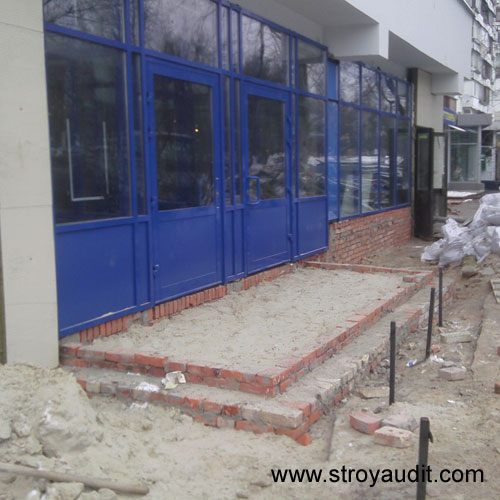
Steps Made from Common Brick is best assessed as part of brick and masonry construction, not as an isolated purchase or finishing choice. A solution may look straightforward in a catalogue or visualisation, yet site conditions usually make it more complex. Loads, moisture, geometry, access and sequence all affect performance.
The focus is why this detail often fails. The whole arrangement must be checked rather than assuming that one material or experienced installer will compensate for unresolved interfaces. The brick must match its location: units suitable for protected internal masonry may have inadequate frost resistance for plinths, steps, chimneys or exposed boundary walls.
The technical logic behind the decision
Brickwork is a system of units, mortar, support, ties, joints and moisture control. Strength or appearance alone does not guarantee durability: the masonry must suit the load, exposure, movement and finishing arrangement. The design should therefore describe not only what is installed, but also what supports it, protects it, allows it to move and keeps it accessible.
Key checks for design and installation
- Inspect dimensional consistency and sample several pallets.
- Provide a sound bearing detail for facing masonry.
- Coordinate ties, reinforcement, openings and movement joints.
- Protect horizontal surfaces and lower courses from water.
- Keep cavities and drainage paths clear of mortar droppings.
Each check should be supported by drawings, photographs, product data or measurable tolerances before the work is concealed.
Where projects usually go wrong
Typical problems include long elevations built without movement accommodation; poor batch control causing colour and dimensional variation; and internal-grade brick used in exposed external locations. Once concealed, these defects usually require removal of adjacent finishes before the real cause can be reached.
What a complete handover should include
Masonry should be inspected for line, level, joint filling, support, ties, moisture details and protection before adjacent layers conceal the work. Workmanship is most dependable when the design and acceptance criteria are already clear.
For a broader project context, review brick house construction, then compare relevant examples or services through house construction services and PNV portfolio.