12.04.2022
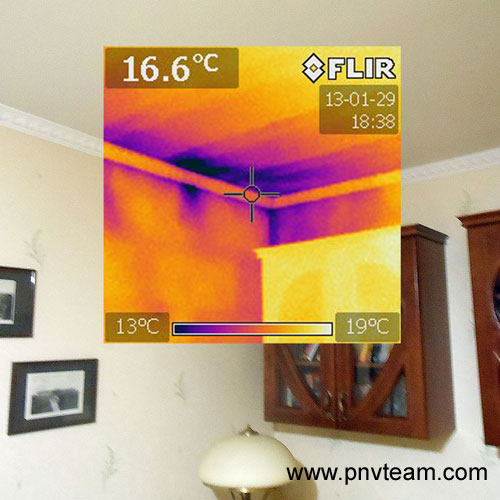
Apartment Insulation is best assessed as part of insulation and facade performance, not as an isolated purchase or finishing choice. Most expensive defects do not begin in the visible finish. They start in the concealed layers, missing information or interfaces that were left for different trades to resolve on site.
The focus is where condensation and mould commonly develop. The whole arrangement must be checked rather than assuming that one material or experienced installer will compensate for unresolved interfaces. The position and vapour behaviour of each layer should be checked so that added insulation does not move condensation into a concealed, slow-drying part of the assembly.
How the system should work in practice
Insulation performs only as part of a complete wall or roof build-up. Substrate condition, continuity, moisture movement, wind protection, fixings and junctions matter as much as nominal thickness. The safest approach is to establish measurable checks before procurement, then inspect the work before the critical layers are concealed.
Questions to resolve before procurement
- Treat window reveals, plinths, parapets and roof junctions as separate details.
- Protect mineral wool from wind washing and construction moisture.
- Use compatible adhesives, fixings, meshes and finish coats.
- Provide drainage and ventilation where the system requires it.
- Inspect the layer before it is covered.
Each check should be supported by drawings, photographs, product data or measurable tolerances before the work is concealed.
Mistakes that lead to rework
Typical problems include wet insulation enclosed behind finishes; facade systems installed on weak or contaminated substrates; and missing reinforcement around openings. They often appear only after seasonal movement, moisture or routine use, when correction is significantly more disruptive.
Final checks and future maintenance
A useful handover includes photographic records of the insulation layer, checks of junction continuity and, where appropriate, a thermal imaging inspection under suitable weather conditions. These questions are cheapest to resolve before procurement and before concealed work begins.
PNV connects this subject with thermal imaging inspection. Further project information is available through passive house construction and PNV portfolio.