12.03.2024
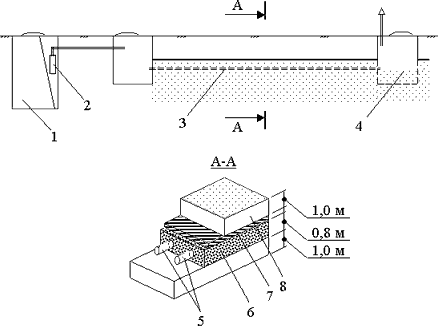
Discharging Treated Wastewater is best assessed as part of water supply and drainage, not as an isolated purchase or finishing choice. Visible quality is only the final layer of this topic. The lasting result depends on how the underlying design, materials, workmanship and future maintenance are coordinated.
The focus is options to assess before construction. The whole arrangement must be checked rather than assuming that one material or experienced installer will compensate for unresolved interfaces.
Within PNV Construction Group, the relevant crews, private contractors and specialist companies work to shared drawings and acceptance criteria.
Why the detail must be considered as a system
Water systems work reliably when routes, falls, pipe sizes, isolation points and maintenance access are coordinated before floors and walls are closed. Small errors can remain hidden until leakage, odour, noise or repeated blockage appears. A robust specification links the visible component to the substrate, adjacent systems, environmental exposure and the sequence of work.
What to check before work begins
- Protect external runs from frost and ground movement.
- Coordinate drainage with waterproofing, floor levels and sanitary fittings.
- Insulate hot-water and condensation-prone pipework.
- Record concealed routes and valve locations.
- Confirm pipe diameters, gradients and connection levels.
Each check should be supported by drawings, photographs, product data or measurable tolerances before the work is concealed.
Common failure patterns
Typical problems include insufficient falls or excessive bends in drainage runs; inaccessible traps, valves, filters or rodding points; and unvented stacks causing odours and trap seal loss. Intermediate inspection is therefore more valuable than relying on a purely visual final check.
Inspection, handover and maintenance
The system should be tested before closure, photographed, labelled and handed over with clear access to isolation valves, filters and inspection points. Workmanship is most dependable when the design and acceptance criteria are already clear.
PNV connects this subject with renovation services. Further project information is available through house construction services and contact page.