04.10.2001
Accepting Brick Deliveries is best assessed as part of brick and masonry construction, not as an isolated purchase or finishing choice. The right decision is not simply the product with the best advertised figure. It is the solution that fits the building, can be installed correctly and remains understandable to maintain.
The focus is what to check before materials enter the work. The whole arrangement must be checked rather than assuming that one material or experienced installer will compensate for unresolved interfaces.
From a good idea to a reliable result
Brickwork is a system of units, mortar, support, ties, joints and moisture control. Strength or appearance alone does not guarantee durability: the masonry must suit the load, exposure, movement and finishing arrangement. In construction practice, the important question is how the chosen solution behaves after the first season, after finishes are closed and during routine service.
Practical acceptance criteria
- Use mortar compatible with the unit and exposure.
- Protect unfinished masonry from rain and rapid drying.
- Confirm the brick type, strength, frost resistance and intended use.
- Inspect dimensional consistency and sample several pallets.
- Provide a sound bearing detail for facing masonry.
Each check should be supported by drawings, photographs, product data or measurable tolerances before the work is concealed.
Risks hidden behind the finished surface
Typical problems include internal-grade brick used in exposed external locations; facing masonry supported on an inadequate ledge; and blocked cavities and missing drainage openings. Once concealed, these defects usually require removal of adjacent finishes before the real cause can be reached.
Keeping the solution serviceable
Masonry should be inspected for line, level, joint filling, support, ties, moisture details and protection before adjacent layers conceal the work. The aim is not complexity, but clear responsibility for details that determine safety and service life.
Sample panels are useful for visible masonry because they establish the acceptable colour range, joint profile and workmanship before the main elevation is built. They also make later acceptance less subjective.
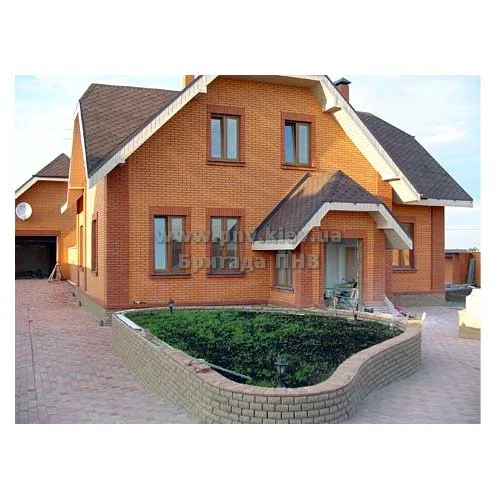
PNV connects this subject with brick house construction. Further project information is available through house construction services and PNV portfolio.