29.11.2002
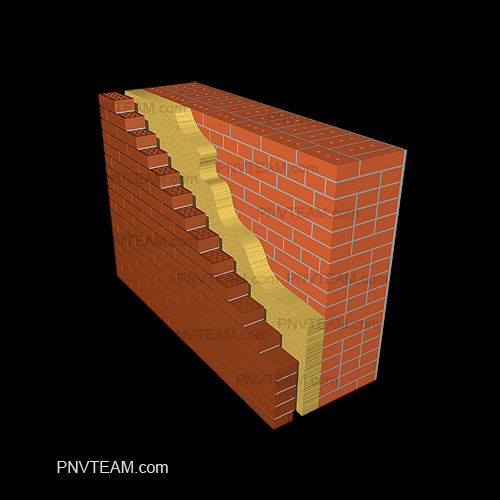
Clinker, Mineral Wool and Brick is best assessed as part of insulation and facade performance, not as an isolated purchase or finishing choice. The right decision is not simply the product with the best advertised figure. It is the solution that fits the building, can be installed correctly and remains understandable to maintain.
The focus is how to avoid overloading the facade. The whole arrangement must be checked rather than assuming that one material or experienced installer will compensate for unresolved interfaces. Clinker’s density and low water absorption do not remove the need for structural support, movement joints, cavity drainage and careful mortar selection.
From a good idea to a reliable result
Insulation performs only as part of a complete wall or roof build-up. Substrate condition, continuity, moisture movement, wind protection, fixings and junctions matter as much as nominal thickness. The safest approach is to establish measurable checks before procurement, then inspect the work before the critical layers are concealed.
Practical acceptance criteria
- Provide drainage and ventilation where the system requires it.
- Inspect the layer before it is covered.
- Confirm the substrate is stable, dry and suitable for the system.
- Calculate or verify the required insulation thickness for the whole assembly.
- Fit boards or batts tightly without open joints or compression.
Each check should be supported by drawings, photographs, product data or measurable tolerances before the work is concealed.
Risks hidden behind the finished surface
Typical problems include wet insulation enclosed behind finishes; facade systems installed on weak or contaminated substrates; and missing reinforcement around openings. Intermediate inspection is therefore more valuable than relying on a purely visual final check.
Keeping the solution serviceable
A useful handover includes photographic records of the insulation layer, checks of junction continuity and, where appropriate, a thermal imaging inspection under suitable weather conditions. These questions are cheapest to resolve before procurement and before concealed work begins.
Related information is available under thermal imaging inspection and passive house construction; the PNV portfolio provides the next practical reference.